The Knee
Knee pain is a common occurrence and it can affect people both young and old. To keep it simple, we can look at knee issues in a few different categories: arthritis; acute injury; and repetitive or overuse injury.
 Unit 4 Ashgrove Industrial Estate, Kill Avenue, Dún Laoghaire, Dublin, A96 HP90
Knee pain is a common occurrence and it can affect people both young and old. To keep it simple, we can look at knee issues in a few different categories: arthritis; acute injury; and repetitive or overuse injury.
Osteoarthritis is a type of joint disease that affects the cartilage that lines our joints. This cartilage allows for smooth movement and can wear over time. In this case, the cartilage around our knee may become worn causing pain or stiffness.
Rheumatoid arthritis is an autoimmune disorder primarily affecting the joints. It can cause inflammation, pain and swelling and symptoms are typical on both sides of the body.
In both these forms of arthritis, movement can become painful. And if something is painful, we will naturally be less likely to it. Unfortunately, movement is what we should be doing – we just need to make sure we’re doing the right type.
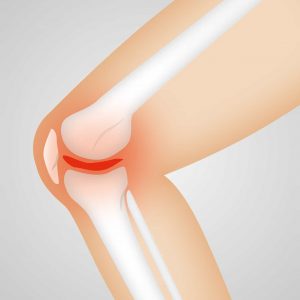
There are various structures around the knee that are commonly injured in the acute sense such as when jumping, landing, twisting and turning.
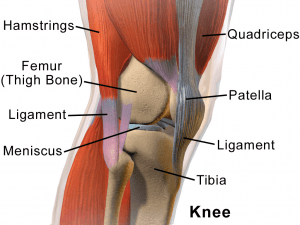
Ligaments: we have numerous ligaments in and around the knee which help to prevent excessive movement. The main ligaments are the:
Medial collateral ligament (MCL) on the inside of the knee;
Lateral collateral ligament (LCL) on the outside of the knee;
Anterior cruciate ligament (ACL) and posterior cruciate ligament (PCL) which lie inside the joint.
These ligaments can be torn or damaged if the knee is stressed too much in a certain direction as a result of force or trauma. Ligament injuries would be common in high velocity sports that require a lot of twisting and turning such as football, rugby, GAA, hurling, basketball and skiing.
Meniscus: these are C-shaped discs made of cartilage that help to cushion the knee. They lie between our long femur bone in the thigh and our tibia bone in the lower leg. They can be damaged with excessive force around the knee, usually when the foot is planted in the ground and the knee is twisted.
Patella: commonly known as our kneecap, it sits in front of the knee joint. It can be fractured by a direct blow to the area or from a fall. The patella can also become dislocated or ‘out of joint, generally from high speed twisting and turning on the planted leg.
An overuse injury will differ from the above in that there is generally no specific disease or incident that directly contributed to the pain or symptoms. Instead, someone might complain about the knee being achy or niggling for a while but they’re unable to pinpoint when it started. One example would be runners’ knee. Mile after mile can place large stress on the muscles and joints, particularly if technique or muscle balance need addressing. The following structures can be affected in overuse injuries:
Muscle: our muscles produce movement. Muscles around the knee include the quadriceps at the front of the thigh and the hamstrings at the back of the thigh. The calves then attach from the back of our lower leg at the achilles and up towards the knee. These muscles will be active in daily activities such as walking, sitting, standing, jogging and cycling. They can become overloaded or strained over time, often with an increase in activity in a short space of time.
Joint: the knee joint is the connection between the femur, tibia and patella (knee cap). Movements at the knee are bending (flexion) and straightening (extension). Over time, issues can occur here because of overuse – depending on the individual’s level of activity from their work or hobbies.
Meniscus: as described above, these are cartilage-like discs that support the knee. They too can become susceptible to pain over time with repetitive use.
The key to resolving all of these issues is starting with a proper diagnosis. This is where your physio comes in and where our google searches can lead us astray. Once this has been established, your treatment will include some form of exercise programme or hands-on therapy. Then an exercise programme will be devised with specific movements and stretches tailored to your needs to ensure you move from where you are now to where you want to get to.

Highly recommend Graham at Monkstown Movement Clinic. He managed to determine the cause of my long-term pain so was able to create a recovery programme completely unique to my lifestyle and injury. Super friendly and welcoming and a very comfortable space in the new clinic in lovely Monkstown.
READ FULL REVIEWGraham was a sports physio for my former rugby team some years back, and when an old injury flared up he was very quick to make himself available to help. It had been a number of years since I had attended physio and I was slightly out of the loop as to who to call...
READ FULL REVIEWI sought Graham’s help to address a problem with stiffness in legs following a period of hospitalisation. He gave me a program of exercises which were easy to follow using an App. He kept in touch with me and with his encouragement and support, I regained full fitness in my legs. I have no hesitation...
READ FULL REVIEW